Is Selling Test Strips a Scam? What Sellers Should Know
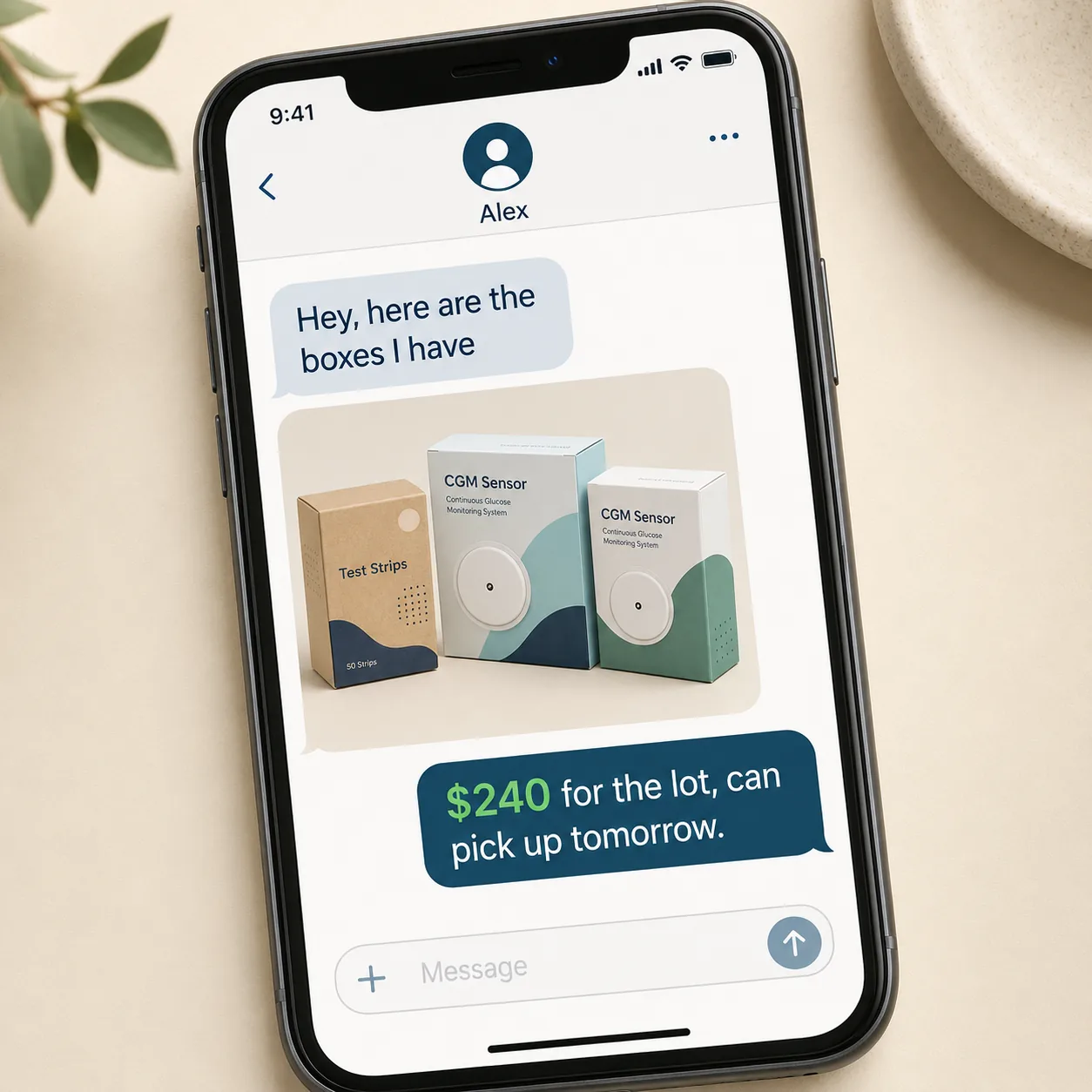
Selling diabetic test strips is not a scam. The market is real and has been running for years. Insurance ships supplies on a schedule regardless of whether the last order got used. Patients switch to CGMs and leave behind boxes of strips that were never opened. People end up with more than they can use before the expiration date. Buyers purchase those supplies and put them back into circulation. Money changes hands because the product has genuine value on both ends. The skepticism about this market comes from somewhere real, and it is worth understanding which part of the market earned it.
Why the secondary market for test strips exists
The economics are straightforward. Insurance delivers supplies on a schedule that does not adjust quickly for changes in a patient's monitoring routine. A 90-day fill arrives whether the last order ran out or not. A doctor writes a new prescription for a different brand, or switches someone to a continuous glucose monitor, and the old strips keep shipping for a cycle or two before the system catches up. Someone passes away and leaves behind a cabinet of sealed supplies. The end result is a steady flow of unexpired, sealed, properly packaged supplies in the hands of people who cannot use them.
Those supplies have real value to people who pay retail prices at the pharmacy. A 50-count box of test strips that costs $30 to $40 at a drugstore can be purchased through the secondary market at a meaningful discount. The buyer pays less than retail. The seller gets cash for something that would otherwise expire in a closet. The FDA classifies blood glucose monitors and their test strips as regulated medical devices, which means an unexpired, sealed box from a name-brand manufacturer meets the same quality standard as the day it left the factory.
Where the concern about scams actually comes from
The secondary market is legitimate. The part that earned the skepticism is a specific practice in the mail-in segment: quoting one price publicly, then revising it lower once the supplies are in the buyer's possession.
The sequence runs like this. A seller sees a price listed online, packs up the supplies, and sends them off. The company receives the box, finds reasons to deduct from the quoted amount (condition, dating, anything they can point to), and sends a revised offer. At that point the supplies are already in the mail. Accepting the lower number or paying to have the box shipped back are the two options. Most sellers take the lower number. The business model relies on that being the likely outcome.
One customer spent years using mail-in services before switching to local pickup. His main frustrations were the wait (close to 3 weeks between dropping the package and getting paid) and the pattern of quoted prices being revised downward once the company had the boxes in hand. He switched to local pickup, came back a few months later when he had more supplies, and has kept coming back since. The quote from his photo is the price he gets. That has been true every time. Once you ship to a mail-in buyer, you are on their timeline and subject to their grading. Nine out of 10 times they will not ship the supplies back if you push back on the revised price.
Red flags before selling to any buyer
A few signals are worth paying attention to before committing your supplies anywhere.
- No pricing published before you submit. Legitimate buyers post their rates. If you cannot see a price until after entering personal information or shipping the supplies, the number you eventually receive is not the one that was implied.
- The quote is described as subject to condition review on receipt. That is the re-grading model described above. A quote off a photo does not change when the buyer sees the box in person.
- No physical presence or identifiable service area. A website with a P.O. box and no named city is harder to hold to anything after the supplies leave your hands.
- Payment timelines measured in weeks. Same-day cash exists in this market. A company quoting 10 to 14 business days is not the standard.
What condition the supplies need to be in
For the transaction to work with any legitimate buyer, the supplies need to meet basic condition requirements. Sealed original factory packaging. Expiration date not yet passed. No damage to the box bigger than a quarter. No blood on the packaging, not even a trace. No moisture damage. Test strips need 9 or more months before expiration for the full rate; CGM sensors need 7 or more months. The guide on checking if test strips are still good walks through how to find and read the dating on different box types.
Pharmacy labels are a separate question. If the box still has a label from the dispensing pharmacy on it, leave it on. Peeling a label off yourself almost always damages the cardboard and can reduce or eliminate the offer. We remove and shred labels at the office. Send a photo with the label visible and we quote from that. The post on the legal side of selling supplies covers what makes a sale appropriate, including how labeled boxes fit into the picture.
How local pickup works, start to finish
Text a photo to (617) 702-2220. Front of the box, expiration date visible. Multiple boxes: a group photo works fine, or a few separate shots. During business hours (Mon–Sat 9am–6pm, Sun 11am–4pm) a quote usually comes back within about 60 minutes. The full price guide has current rates for every brand we buy if you want a ballpark before reaching out.
The service area is Worcester County and 25 miles out. Core Worcester usually runs same-day. Outer towns we schedule when there are stops in the area. Payment is cash, Cash App, or Venmo the day of pickup, your call. The quote from your photo is the price you get at the door. We do not re-grade on receipt.
We have been doing this since 2019, 2,000+ pickups in. The process is the same every time: photo in, quote back, pickup scheduled, cash in hand. For a side-by-side look at how local pickup compares to the mail-in setup described above, the local vs. mail-in comparison covers the full picture. The American Diabetes Association overview of blood glucose meters is a useful reference if you are not sure which monitoring category your supplies fall into.
The one case not to sell
Worth saying plainly: if you are between fills, keeping a box as a backup, or not sure you might need the supplies before the expiration date, hold onto them. Cash today is not worth being caught without monitoring supplies in a few weeks.
We only want what you genuinely do not need. Take care of your health first. A real surplus — sealed boxes, dated correctly, no real chance you will reach for them — is the inventory we are here for. Not a situation where someone needs the cash and parts with supplies they should have kept. If you are uncertain whether you might still need a box, the right call is to hold it.
If the answer is a genuine surplus, text a photo to (617) 702-2220. You will have a number the same morning.
Frequently asked questions
Is selling unused diabetic test strips legal?
Yes. Selling unopened, unexpired test strips you legally obtained is permitted. The supplies need to be sealed, undamaged, and not subject to any specific resale restriction from the source. The full legal overview covers the details.
Do test strip buyback companies pay what they advertise?
Local buyers who quote from a photo and pay on the spot generally do. You see the cash before the box leaves your hand. Mail-in operations are more variable. The price listed on a website is not always the price you receive. Some companies have a documented practice of revising offers after they have the supplies, at which point your options are limited.
What happens if a mail-in buyer offers less than they quoted after receiving my supplies?
Your main option is to accept the revised price or request the supplies back, usually at your own shipping cost. Most mail-in companies will not reverse a revised offer. Local pickup avoids this scenario entirely because the quote from your photo is binding before the box leaves your hand.
What makes a diabetic supply buyback company trustworthy?
Published pricing, a binding photo-based quote, same-day or next-day payment, and a verifiable service area are the main markers. If a buyer will not commit to the photo quote being the final price, that is worth knowing before you agree to anything.
What supplies are rejected even by legitimate buyers?
Expired supplies, opened boxes, any blood on the packaging, significant box damage, generic or store-brand strips, and lancets or ketone strips. These are not case-by-case calls. For anything in a gray area (short dating, minor damage, pharmacy labels), a photo gets you a direct answer.
How fast does local pickup pay compared to mail-in?
Text a photo during business hours (Mon–Sat 9am–6pm, Sun 11am–4pm) and you usually have a quote within about 60 minutes. Pickup can often happen the same day in the core Worcester zone, with cash, Cash App, or Venmo in hand. Mail-in timelines typically run days to weeks, with payment arriving after the company receives and reviews the box.
What if my box has a pharmacy label on it?
Leave it on. Peeling the label yourself almost always damages the cardboard and can reduce or eliminate the payout. Send a photo with the label visible and we quote from that. Labels are removed and shredded at the office before anything else happens with the supplies.
Is there a minimum quantity needed to sell?
No. A single box is worth quoting if it meets the condition requirements. The payout scales with volume, but there is no minimum. Text a photo of whatever you have to (617) 702-2220 and we will tell you what it is worth.