How Test Strip Buyback Companies Make Money, Explained
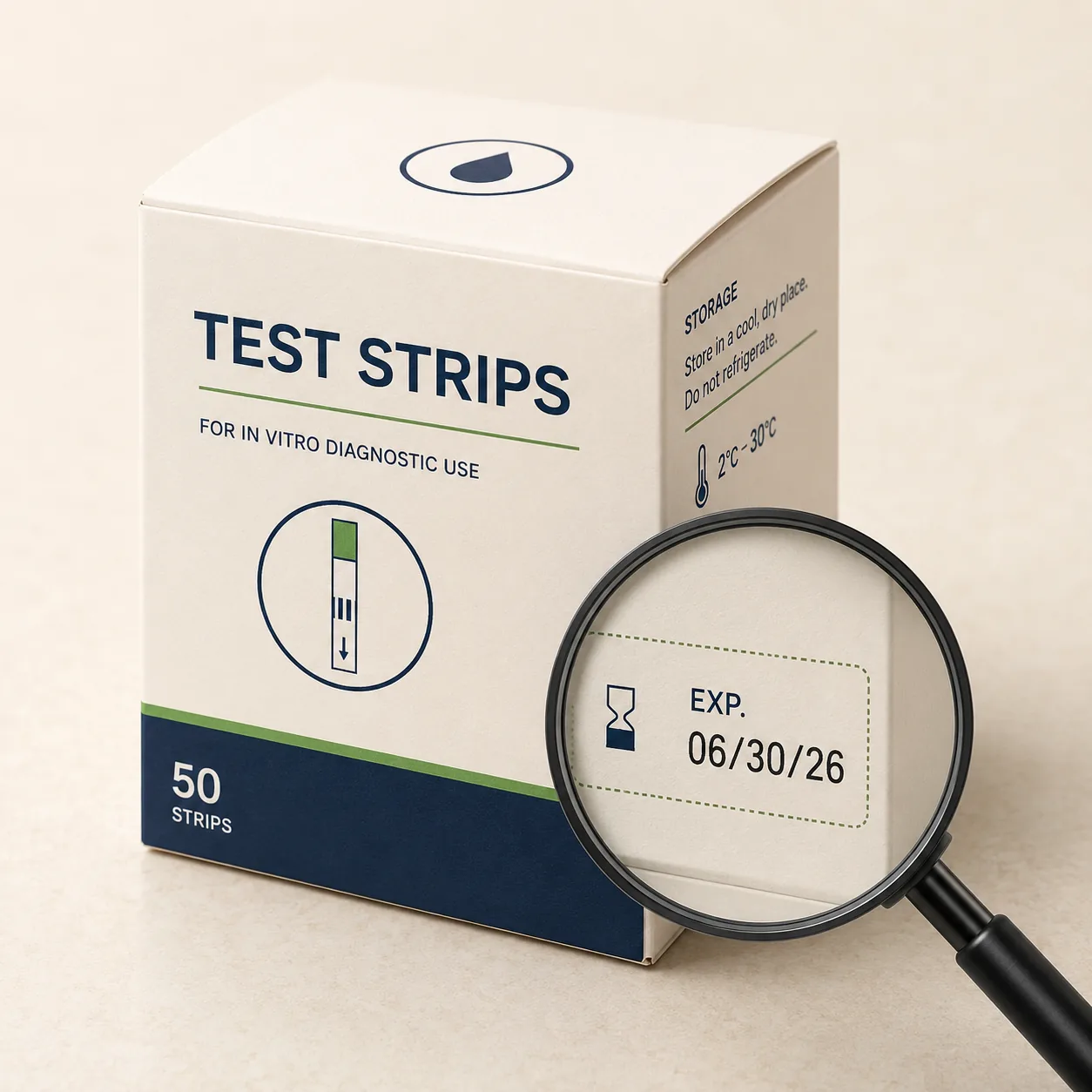
How do test strip buyback companies make money? By buying sealed, unexpired surplus from people who can't use it and reselling it to people who can't afford retail prices. The spread between those two prices is the margin. Condition rules, expiration tiers, and brand restrictions exist because that margin disappears the moment a supply fails in the end user's hands.
The supply glut that makes the model possible
Insurance ships supplies on a fixed schedule. A patient gets a set quantity per month whether they use all of it or not. A brand change, a prescription update, or a switch from finger-stick testing to a CGM can make an entire supply stock surplus overnight. There's no return window at the pharmacy. No mechanism through insurance to redirect the shipments. The deliveries keep coming until the coverage period resets.
That's not an edge case. Doctors adjust treatment plans. New devices come to market. A patient's condition progresses to where continuous monitoring makes more sense than daily finger sticks. Each transition creates surplus. The guide on selling diabetic supplies after switching to a CGM covers one of the most common versions of this.
The supply that feeds this market is structural. It refills itself every time someone changes brands, updates a prescription, or switches devices. That's why the inventory keeps showing up.
Where the demand comes from
The end buyers are people managing diabetes without full coverage for supplies. The CDC's national diabetes statistics document tens of millions of Americans with the condition, a significant portion of whom face coverage gaps at any given time. Self-pay patients still need to test. Retail test strips and CGM sensors aren't cheap.
A sealed, unexpired box works the same as a pharmacy purchase. The FDA's guidance on blood glucose monitoring devices establishes that reliability depends on intact packaging and the manufacturer's expiration date. Intact seal, good dating: the product performs as labeled.
The spread between what a buyback buyer pays and what retail charges is what makes the transaction work for both sides. The seller gets cash for supplies they weren't going to use. The buyer gets supplies at a fraction of pharmacy price. A local buyer sits in the middle, connecting the two.
How buyback buyers set their prices
A quote comes down to four things: brand, quantity, expiration dating, and condition. Those four variables determine what the supplies are worth to the secondary market.
Dating matters most. Test strips pay full price at 9+ months from expiration. CGM sensors pay full price at 7+ months. Below those tiers, the price adjusts to reflect how much usable shelf life is left. Less time on the clock means less value to whoever ends up using it. That's not a penalty. It's the math.
Current numbers: Dexcom G6 (3-pack) up to $120. Omnipod 5 (5-pack) up to $120. Omnipod Dash pods (5-pack) up to $70. Dexcom G7 15-day (single) up to $50. Dexcom G7 (single) up to $35. FreeStyle Libre 3 (single) up to $30. FreeStyle Lite (100ct) up to $20. Full rates for every accepted brand are on the full price guide.
For anything not on the standard list, or anything with unusual dating or a label question, text a photo to (617) 702-2220. The photo quote is what you get at the door. No adjustments once we're there.
Why condition rules aren't optional
An expired strip doesn't perform as labeled. An opened box doesn't carry the manufacturing seal guarantee. A cracked corner or moisture damage raises real questions about whether the chemistry inside has been compromised. The condition floor isn't arbitrary. It's where the margin goes to zero.
Hard nos: expired strips, opened or broken-seal boxes, blood or moisture anywhere on the packaging, box damage bigger than a quarter. Generic or store-brand strips aren't accepted. Neither are Bayer, Precision Xtra, or Embrace test strips.
The checklist for evaluating whether test strips are still good goes through every condition standard if you want to verify your supply before texting a photo.
What happens to supplies after buyback
Sealed, undamaged supplies go to people who need them and can't afford retail. That's the end of the chain.
The secondary market routes surplus from insured patients who have more than they need to self-pay patients who can't cover the pharmacy price. The American Diabetes Association documents the clinical importance of consistent monitoring for people with diabetes. The supplies that pile up in one household are the same supplies another person is rationing.
A box of sealed Omnipod 5 pods sitting in a closet in Auburn and a patient in Grafton who needs pods and doesn't have full coverage are separated by about 15 miles and a phone call. That's what the secondary market is for. The supply's quality doesn't change just because it changed hands.
That's the demand side of this market. It's steady and consistent, which is why the secondary supply market has persisted for as long as it has.
How local and mail-in buyers have different incentives
One customer used to send his supplies in for cash. He waited up to 3 weeks for payment. The quote he'd been given online didn't match what showed up when the company had the boxes in hand. Once the supplies are in the mail, they have the boxes and you have a promise. If they decide to adjust the price, the options are: accept the new number, or pay return shipping and hope the boxes come back intact.
Nine out of ten times, they won't return the supplies if you disagree with their revised price. He switched to local pickup. He comes back every few months now.
Local pickup works differently. The quote comes first, off your photo. The box stays in your hands until you have the cash. No re-grading at the door. How a local vs. mail-in buyback actually compares covers the tradeoffs for anyone working through the decision.
What a quote looks like here
Text a photo to (617) 702-2220: brand, count, and expiration date visible. Quote back within about 60 minutes during business hours (Mon–Sat 9am–6pm, Sun 11am–4pm). If it works, pickup goes same-day across Worcester County and 25 miles out. Cash, Cash App, or Venmo at the door.
Since 2019, more than 2,000 pickups and $250,000+ paid out across Worcester County and surrounding towns. The full walkthrough of how the buyback process works covers every step from the first photo to cash in hand.
Frequently asked questions
How do diabetic test strip buyback companies make money?
By buying sealed, unexpired surplus from people who can't use it and reselling it to self-pay patients who can't afford retail. The spread between those two prices is the margin. Condition and dating rules exist because the margin disappears the moment a supply fails in the buyer's hands.
What kinds of supplies do buyback companies accept?
Sealed, undamaged boxes with the manufacturer's seal intact and enough time before expiration. Common accepted brands: Dexcom G6 and G7, FreeStyle Libre 2 and 3, Omnipod 5 and Dash pods, and major test strip brands like FreeStyle Lite. Expired, opened, or generic supplies aren't accepted.
Why do expiration dates affect the buyback price?
Because the end user depends on the shelf life. Test strips pay full price at 9+ months from expiration; CGM sensors pay full price at 7+ months. Below those tiers, the price adjusts to reflect what the supply is worth to someone who'll be using it before the date runs out.
What happens to diabetic supplies after a buyback?
They go to self-pay patients who need them and can't afford retail. A sealed, unexpired box through a buyback works the same as a pharmacy purchase. The secondary market routes surplus from insured patients who have too much to patients without full coverage.
How is a local buyer's quote different from a mail-in buyback?
A local quote comes first, off your photo, and it holds at the door. Mail-in buyers set a price before receiving your supplies, then have the option to re-grade once the box is in their hands. Local pickup means the box stays in your hands until you have the cash.
Why are some diabetic supplies worth more than others?
Brand and format drive most of the difference. CGM sensors (Dexcom, FreeStyle Libre, Omnipod pods) pay more than traditional test strips because they cost more at retail and serve a more specific patient need. Quantity and expiration dating also affect the price.
Do I need a receipt or ID to sell diabetic supplies?
No receipt needed. The quote is off the photo: brand, count, and expiration date visible. If the box at pickup matches the photo, the price holds. A receipt doesn't change what the box is or what it's worth.
What makes a box of diabetic supplies unsellable to a buyback buyer?
Expired strips are a hard no. So are opened or broken-seal boxes, any blood or moisture on the packaging, and box damage bigger than a quarter. Generic or store-brand strips, Bayer, Precision Xtra, and Embrace test strips aren't accepted. If you're not sure, text a photo first.